News from Resourceful People Group
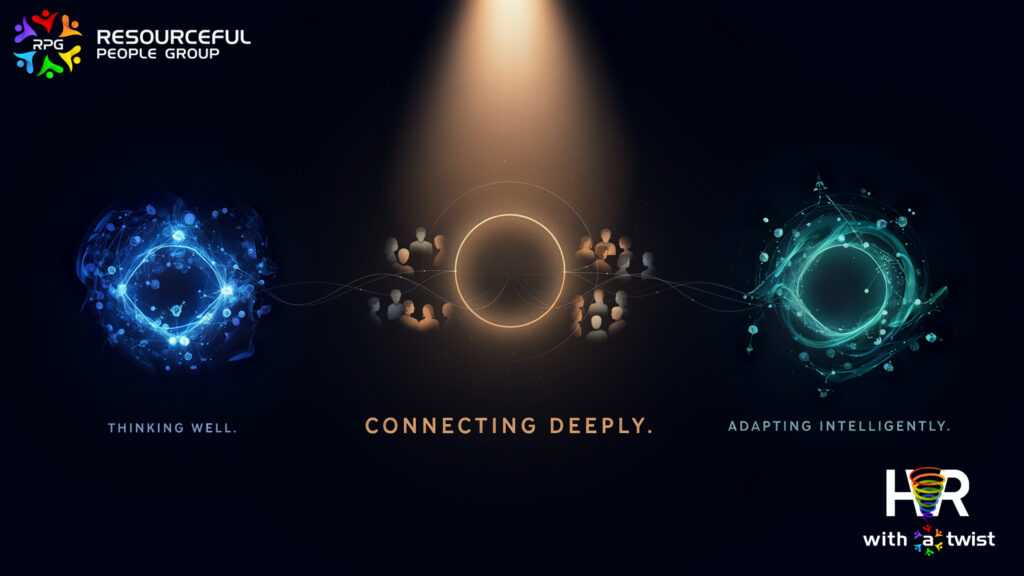
Time we refocused again on “Connecting Deeply”, but not in isolation.
IQ. EQ. AQ. We often talk about them individually. But increasingly, I think thats missing the point. Here at Resourceful People Group Ltd, we see them as something of a mini ecosystem: Thinking well. Connecting deeply. Adapting intelligently. Three different capabilities that continually interact with, and strengthen each other. Today, though, I want to put the spotlight 🔦 back on the middle one: EQ and connecting deeply. My reasoning is because we spend a lot of time talking about the importance of relationships in business, but how often do we stop and ask: How well do I actually understand the person I’m trying to build a relationship with? One of the reasons I value Insights Discovery (working along side AQai – Adaptability Assessments & Coaching) is that it starts by helping us understand ourselves, our preferences, how we communicate, how we make decisions and how we may be experienced by others. But thats only the beginning. The real value comes when we use that understanding to connect more effectively with other people and understand them better. For example the way I naturally communicate may not be the way they / you prefer to receive information. The level of detail I need may frustrate you. The pace at […]
Read the article
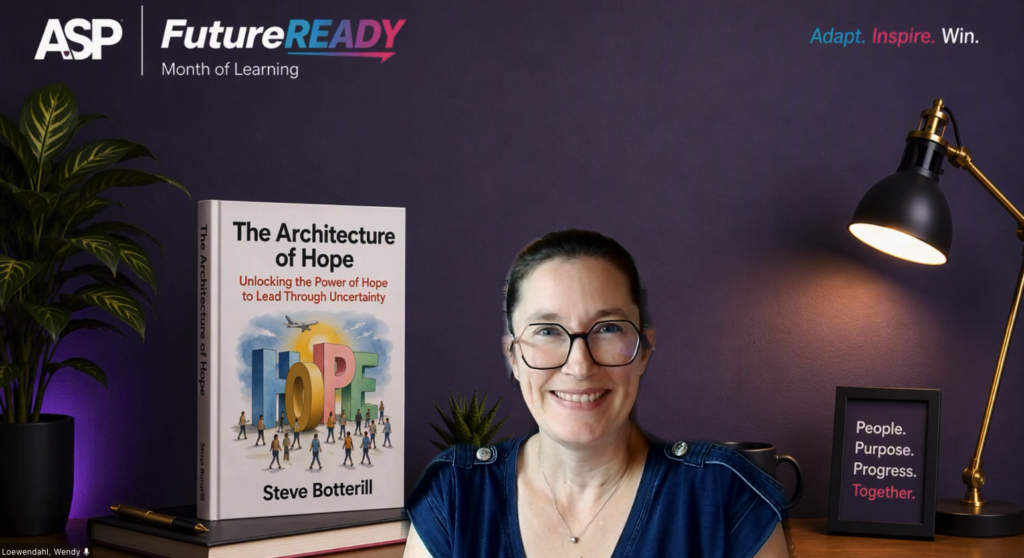
Hope isn’t the opposite of uncertainty…..It’s one of the things that helps us move through it.
I recently had the pleasure of being invited by an old colleague, and now client Wendy Loewendahl (Weber), to contribute to ASP’s Month of Learning, which is part of Advanced Sterilization Products fabulous ‘Future Ready’ initiative. Wendy kindly asked me to record a short session exploring something I’ve become increasingly passionate about: how hope can act as an accelerant to enable & facilitate change. For clarity, this is not hope as wishful thinking or simply crossing our fingers and hoping everything will somehow work out. It is hope as something far more practical, something that helps people to see possibility, identify a way forward and, importantly, take action. That’s why in the AQai ACE model the sub dimension of HOPE is so important and hence why we can actually measure it through the AQai – Adaptability Assessments & Coaching tool. That distinction is really important when organisations are navigating change. Because people rarely resist change simply because they dislike change. Often there is uncertainty, loss of control, fear of what comes next, or simply an inability to see a credible path forward. That’s where hope can become incredibly powerful. It can help us move from “What is happening to me?” towards “What can I do next?” […]
Read the article
Don’t judge me too quickly but …. I think I’m going to retire the phrase “fail fast, fail safely.”
It’s an idea originally embedded in agile, innovation and start-up thinking encouraging us to try things, learn quickly, adapt and make sure getting something wrong isn’t catastrophic. I understand the principle. I’ve used the phrase myself, but last week when in Oman I began to become increasingly uncomfortable with the word fail. So I’m changing my mantra: Instead of “Fail fast. Fail safely.”❌ I am wanting to focus on “Experiment fast. Experiment safely.” ✅ It might sound like semantics, but I think the distinction matters, particularly when we think about change, reinvention and adaptability. Change requires us to do things differently. Reinvention requires us to challenge assumptions and explore what might work next. Adaptability requires us to learn and adjust as we go. But people won’t experiment if they’re frightened of getting things wrong. That’s where leadership and psychological safety matter. We can’t simply tell people to “be more adaptable.” Leaders need to create an environment where people have permission to experiment, sensible risks can be taken safely, and unexpected outcomes become opportunities to learn rather than reasons to blame. An experiment might work. It might partially work. It might surprise us. Or it might prove our original assumption wrong. […]
Read the article
What a fantastic 10 days in Oman! 🇴🇲
It’s been a real privilege to work with Competence, delivering part of a wider Leadership Development Programme for two different cohorts of senior executives from a dynamic Omani business that has a truly international reach. Lots of conversation, challenge, reflection and, importantly, plenty of energy and fun along the way. One of the things I love most about this work is seeing how leadership challenges can cross borders and cultures — whilst the context in which we lead really matters. A huge thank you to everyone involved for the incredibly warm welcome, openness and engagement throughout the programme. Arrived home tired, but energised — and already looking forward to returning to Oman again soon! 🇴🇲✈️
Read the article
🛑 Stop Asking People to Be More Adaptable Without First Looking at Their Environment
As the pace of change increases, we quite rightly encourage people to become more resilient, curious, flexible and comfortable with uncertainty. But there is a danger. We can start to make adaptability entirely the responsibility of the individual. If someone struggles with change, are they resilient enough? Do they have the right mindset? Are they simply resistant? These are legitimate questions, but perhaps we should ask another one first: Have we created an environment in which people are actually able to adapt? You can recruit adaptable people and develop adaptable behaviours, but put those same people into an environment where they feel unsupported, overloaded or psychologically unsafe and their capacity to adapt can quickly diminish. This is one reason I value the environmental data within the AQai – Adaptability Assessments & Coaching assessment. It explores five distinct dimensions: ⚪ Company Support — does the organisation REALLY care about its people, or do they feel like another number?⚪ Emotional Health — do people have the emotional capacity to navigate uncertainty and continual change?⚪ Team Support — is there genuine support and the psychological safety to speak up, challenge, experiment and learn?⚪ Work Environment — do the culture and ways of working […]
Read the article🛑 What does “People First. Change Ready.” look like in practice? 👀
In this short conversation, recorded at the Festival of Work, Hannah Makepeace, HR Manager at St Edmund’s College, shares her experience of working with Resourceful People Group Ltd (RPG). Hannah talks about the proactive approach she has taken at the College and impact of our work together — from helping to change people’s minds and seeing a real difference across the College, to understanding their key challenges and helping them navigate those challenges through a supportive coaching and mentoring approach. She also describes the sessions as “fun, easy to follow” and working with RPG as “amazing.” For us, that captures what “People First. Change Ready” is all about. It’s not simply about providing training or introducing new tools. It’s about understanding the organisation, its people and its challenges — then working alongside them to build confidence, capability and adaptability for whatever comes next. A huge thank you to Hannah for taking the time to share her experience — and to St Edmund’s College for continuing to trust RPG to support their people. Resourceful People Group | People First. Change Ready.
Read the article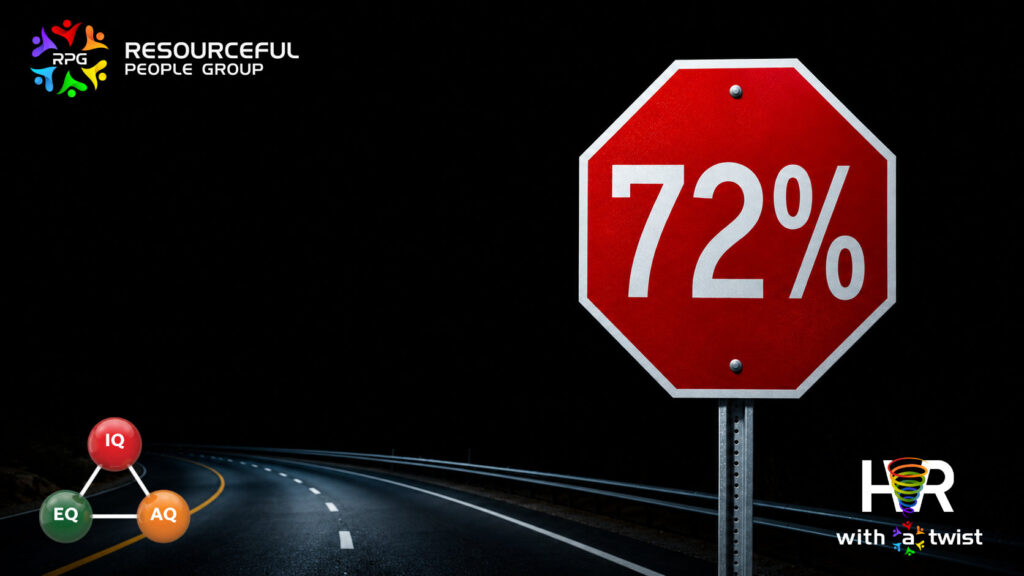
72% of leaders say their organisations are not fully ready for the changes ahead.
That statistic stopped me when I read McKinsey & Company State of Organizations 2026 report (BTW I would recommend reading). Not because change is new, but because despite everything organisations have learned about disruption, resilience and transformation, almost three-quarters of leaders still don’t believe their organisation is fully ready for what comes next.Perhaps that’s because being ready for change isn’t the same as having a change plan. You may have the strategy, the programme, the technology, the project plan even the communications, but what about the people who have to make it happen? 🔶 How comfortable are they with uncertainty?🔶 How willing are they to challenge assumptions, experiment and unlearn what has worked before?🔶 And are leaders creating the trust and psychological safety people need to speak up, learn and adapt? McKinsey argues that organisations increasingly need to develop change as a CONTINUOUS capability rather than treating it as a one-off project.I think that’s an important distinction. Here at Resourceful People Group Ltd, we believe in “People First, Change Ready” and becoming change ready isn’t just about processes and plans.It requires the human capabilities that enable people to navigate change successfully. Emotional Intelligence (EQ) helps us understand ourselves and others, build trust and lead people […]
Read the article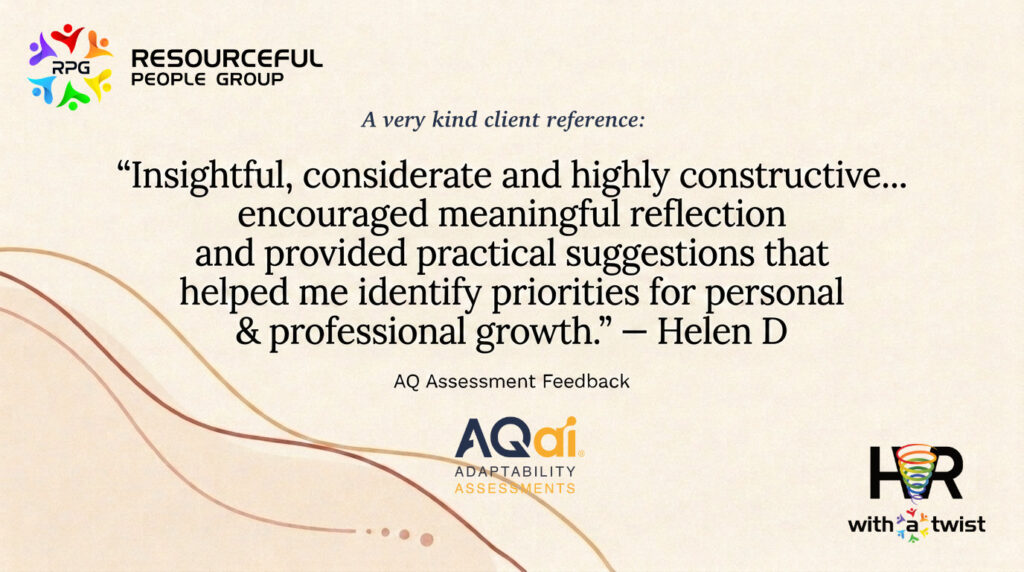
Nice to hear it makes a difference:
Very humbled to have received this: “Steve (from Resourceful People Group Ltd) feedback on my AQ (Adaptability Quotient) psychometric assessment was insightful, considerate and highly constructive. He took the time to explain the results in a clear and balanced way, helping me understand both my strengths and the areas where I could further develop my effectiveness. Rather than simply focusing on the scores, Steve encouraged meaningful reflection and provided practical suggestions that helped me identify priorities for personal and professional growth. His supportive approach created a positive environment for the conversation and left me with a clear sense of actionable progress steps. I found the session both engaging and beneficial with some timely and well managed insight.” — Helen If you want to know more and how we can make a real difference personally or within your team then please reach out to us to find out more.
Read the article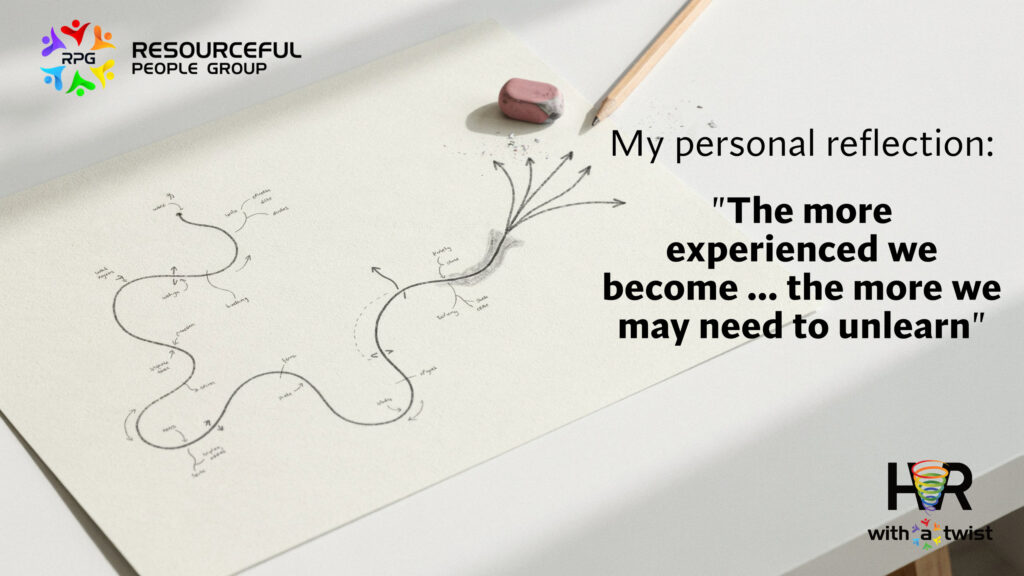
🌟 Sometimes the most valuable part of learning is discovering what we need to let go of 🌟
Yesterday I submitted my application to become a certified AQai Level 3 Master Practitioner. I’m obviously hoping I’ve done enough to achieve the accreditation, but the process has made me reflect on something rather more important than another qualification. The AQai practitioner pathway has evolved alongside its expanding adaptability toolkit — from Level 1 ‘Foundations’, through Level 2 ‘Professional’, and now to the newly introduced Level 3 ‘Master’. I’ve been fortunate to be part of the inaugural L3 cohort, led by AQai CEO and co-founder Ross Thornley, MABP. But here’s the irony. The further I’ve progressed in studying adaptability, the more I’ve realised that mastery isn’t necessarily about just knowing more.Sometimes it’s about being willing to question what we think we already know. Years working across HR, leadership, change and business inevitably create patterns — assumptions about what works and shortcuts based on experience. That’s valuable. Until, perhaps, it isn’t. Two areas I’ve reflected whilst absorbing the L3 syllabus were my relationship with the sub-dimensions of ‘Mindset’ and ‘Unlearning’. Perhaps part of wanting to become expert is developing the mindset to question what experience has taught us and the ability to unlearn it when it no longer serves us (whether it is a total or […]
Read the article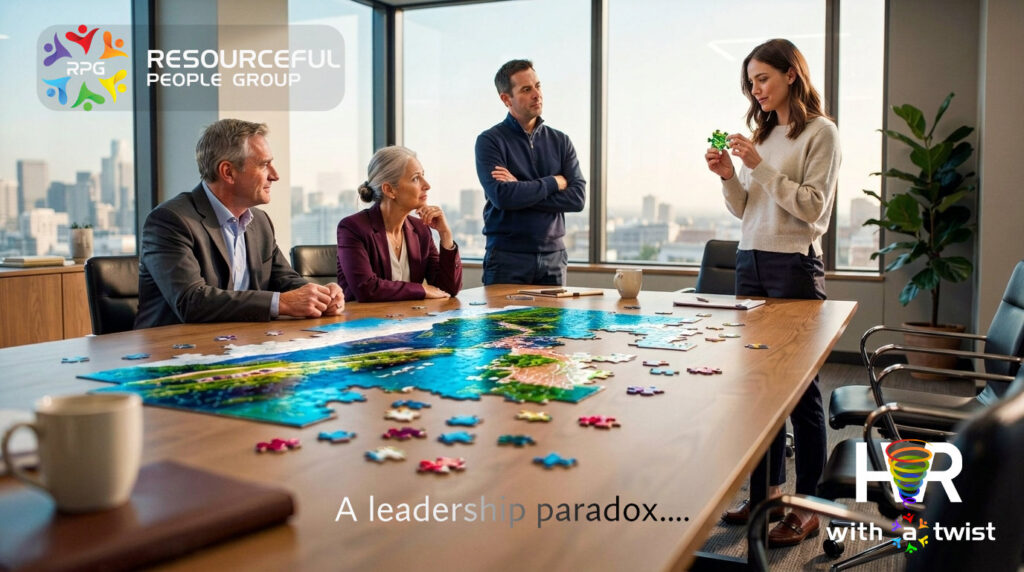
Here’s a leadership paradox I’ve been reflecting on recently… 🤔
The quality of the final picture isn’t determined by who holds the box. It’s determined by whether the person holding the missing piece feels safe enough to speak. The most effective leaders don’t create environments where everyone agrees.They create environments where people feel safe enough to improve the quality of the decision before it’s made. When organisations talk about implementing change, the conversation often begins with the plan.🔸 The strategy.🔸 The timeline.🔸 The milestones.🔸 The communication.All of those matter, but I’ve increasingly come to believe that one of the most overlooked enablers of successful change is something far less tangible. 👀 Psychological safety 👀 Not because it makes people feel comfortable, but because it allows people to make the change better. When people feel psychologically safe, they are more likely to ask:▪️ “Can I clarify something?”▪️ “Have we considered the impact on…?”▪️ “I’m not convinced this will achieve what we hope.”▪️ “Could there be a better way forward?”Those questions shouldn’t be seen as resistance. More often than not, they’re acts of contribution. The organisations that navigate change most effectively aren’t necessarily those with the smartest leaders. They are the ones that remain adaptable and are often those where leaders create environments […]
Read the article