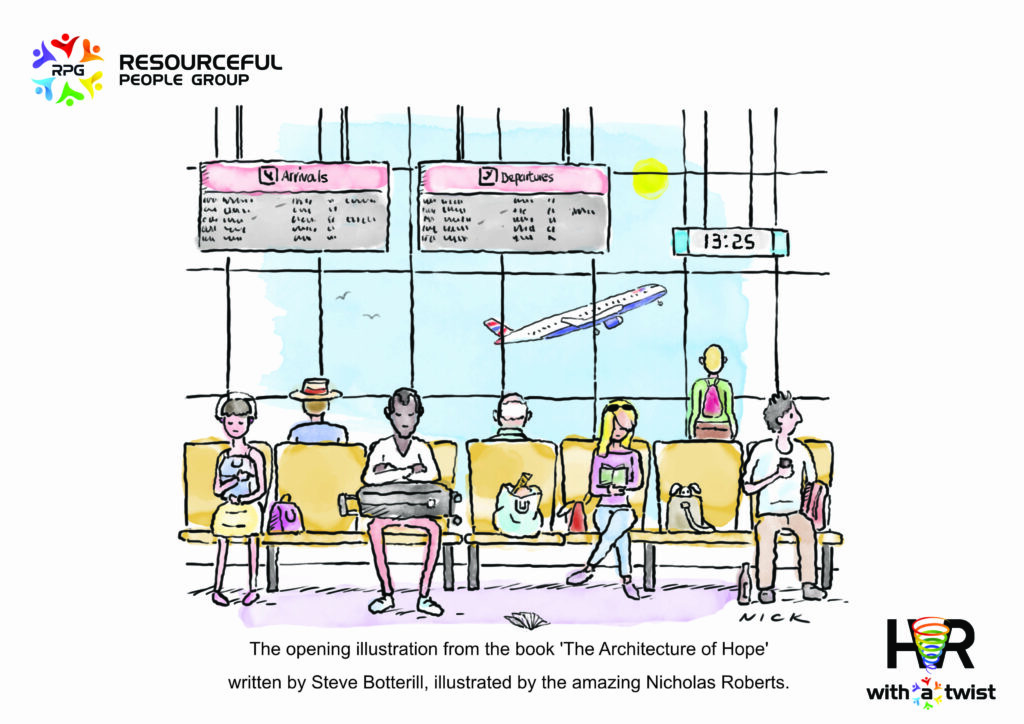
Hope is underestimated….
12 May 2026The more I researched and wrote ‘The Architecture of Hope’, the more convinced I became that HOPE is one of the most underestimated forces both personally and inside organisations today.
Not hope as blind optimism, but hope as our ability to believe progress is still possible, even during uncertainty, challenge and change using 1 or more of the 5 themes of hope I describe in my book.
Researchers such as Snyder and Lopez explored hope as something far more practical than many people assume connected to motivation, pathways forward, resilience and human progress.
And the more I reflected on this through my own experiences and years of working with organisations navigating uncertainty, the more I started to see hope differently.
Not simply as emotion, but as a fundamental infrastructure.
Because when hope disappears:
➡️ adaptability weakens
➡️ trust erodes
➡️ people disengage
➡️ and progress quietly slows
That’s why the book explores hope through both:
🔶 a modern illustrated parable (the story I use is set at an airport)
🔶 and a practical framework grounded in leadership, adaptability and real-world experience
I’ve also been hugely encouraged by the support of people whose thinking I respect greatly, including Ross Thornley, MABP, who kindly wrote:
“If you’ve ever wondered why some teams keep going when things get hard and others collapse, Steve’s book gives you the answer, and more importantly, gives you something to do about it. This is hope made practical, grounded in science, and written by someone who’s worked hard to embody it.”
Hope isn’t soft at all and it is vital for us to leverage in BOTH everyday events / change but especially as we consider implementing significant change programs.
In many ways, it’s one of the hidden foundations that allows people, teams and organisations to keep adapting when uncertainty becomes the norm, which is one of the reasons HOPE also forms part of the AQai – Adaptability Assessments & Coaching ACE® model Character dimension as an important adaptability accelerant.
If you are interested in discussing this further then please contact me directly on LinkedIn. Alternatively if you fancy getting you own copy of the book you can find it on Amazon (https://amzn.eu/d/0fxYbJUq) and possibly also in your local book store.